
Starting a business is exciting, but financing can be challenging. For many founders, securing a startup loan is essential.
But what if your credit report shows open collections? Many entrepreneurs worry that past debts will automatically disqualify them from funding.
The good news is that open collections do not automatically prevent approval. Lenders review your full financial profile, not just one negative mark. They consider the age, amount, context of the debt, and your overall repayment ability.
In this guide, you’ll learn how collections affect approval, what lenders evaluate, and how to improve your chances.
Collections occur when unpaid debts are transferred to a third-party agency after missed payments.
For lenders, collections signal past financial difficulty. They raise concerns about repayment risk. When reviewing a startup loan application, lenders use your credit report and score to assess how reliably you handle debt.
Open collections suggest unresolved obligations, which can increase perceived risk.
Lenders don’t view all collections equally; the recency, amount, and type of debt significantly impact their assessment of risk.
Yes, open collections can hurt your chances of getting approved for a startup loan. However, the impact depends on several factors. Lenders do not treat all collections the same.
They typically look at:
Recency: Older collections are viewed less critically than recent ones.
Amount Owed: A small unpaid bill carries less weight than a large outstanding balance.
Status (Paid vs. Unpaid): An unpaid collection is more concerning than one that has been settled or paid.
Number of Collections: One isolated account is less serious than multiple open collections.
Type of Debt: Some debts, such as medical collections, may be viewed more leniently.
Overall Credit History: If the rest of your credit report shows strong, consistent repayment behavior, the impact of a collection may be reduced.
Startup loans already carry higher risk because the business is new. As a result, lenders examine negative marks more closely. Open collections may lead them to question financial discipline and repayment reliability.
The answer depends on your situation.
Paying shows responsibility and may improve lender perception.
Paying updates the account to “paid” or “settled,” but it may not dramatically raise your score right away. Before making a large payment, consider the impact on both your credit and cash reserves.
An open collection signals unresolved debt and higher risk.
A paid collection shows corrective action. While the negative history remains, lenders view paid accounts more favorably.
Combined with stable income and a strong business plan, paid collections create a stronger overall profile.
Collections can cause a significant drop when first reported. However, their impact decreases over time.
Lenders often focus more on recent credit behavior. If you have 6–12 months of on-time payments, low credit utilization, and no new negative marks, older collections carry less weight.
Consistent, positive credit behavior matters.
Collections rarely determine approval alone. Lenders evaluate:
Steady, verifiable income supports repayment.
Lower DTI reduces lender risk.
Clear projections and realistic cash flow build confidence.
Recent on-time payments can outweigh older issues.
Lenders want to see how financing will generate revenue.
A strong overall profile can offset past credit problems.
If you have collections:
Preparation significantly improves approval odds.
You may consider applying if:
Alternative lenders, credit unions, CDFIs, and SBA microloan programs may offer more flexibility than traditional banks.
Avoid rushing into an application. Premature submissions can lead to denials and additional credit inquiries.
Instead:
Strategic timing increases approval chances.
So, can you get a startup loan with open collections?
Yes. But approval depends on your full financial picture, not just the collections.
Open collections may lower approval odds or increase interest rates, but they do not automatically disqualify you. Strong preparation, stable income, and a clear business plan make a significant difference.
Past financial setbacks do not define your future business success. With the right strategy, you can still secure the funding you need.


Subscribe for our monthly newsletter to stay updated.

Open collections can impact your startup loan approval, but they don’t automatically disqualify you. Learn how lenders evaluate credit history, what matters most, and how to strengthen your application for business financing.
How long after credit damage can you qualify for a startup loan? While late payments, collections, or bankruptcy can impact approval, lenders focus on recovery trends, financial stability, and recent payment behavior. Learn how long different types of credit damage affect your eligibility and what steps you can take to improve your chances of securing startup funding faster.
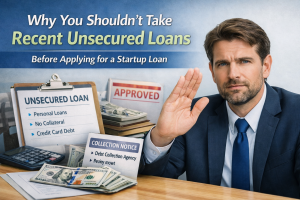
Taking recent unsecured loans before applying for a startup loan may reduce approval odds, increase interest rates, and lower funding amounts. Learn how credit score impact, debt-to-income ratio, and timing affect your ability to secure business financing.