
Best Startup Loan Options for New Businesses​

Launching a new business is an endeavor fueled by passion, innovation, and a clear vision for the future. However, the thrilling prospect of entrepreneurship often comes face-to-face with a formidable challenge: securing the necessary startup capital. Many aspiring business owners harbor the misconception that obtaining business financing is an insurmountable hurdle, particularly due to a lack of operating history, limited annual, or an undeveloped credit history. While these concerns are valid, the modern lending landscape offers a robust array of startup loans and funding options specifically designed to support new ventures.

This comprehensive guide is designed to demystify the world of business loans for startups. We will explore the most promising loan programs, illuminate the nuances of eligibility requirements, and provide actionable strategies to help you secure the capital needed to bring your business goals to fruition. Whether you’re a sole proprietor or looking to scale a burgeoning enterprise, understanding your options is the first crucial step toward sustainable small business growth.

What Is a Startup Loan?

A startup loan is a specialized form of business financing tailored for new entities, typically those in operation for less than two years. Unlike traditional business loans, which often demand a substantial operating history, a proven track record of cash flow, and robust financial statements, startup loans are structured to evaluate a business’s potential rather than solely its past performance. Lenders who offer these specialized loan programs typically consider a variety of factors to assess viability. These can include the thoroughness and realism of your business plan, projected cash flow and annual revenue, the founder’s relevant industry experience, and their overall credit behavior, which encompasses both personal and emerging business credit.

Thesestartup loansare commonly utilized to cover initial startup expenses, such as purchasing essential equipment, securing office space, funding marketing initiatives, or obtaining initial inventory. They can also serve as a working capital loan to ensure smooth day-to-day operations during the critical early stages. For many new business owners, startup loans represent a vital lifeline, enabling them to invest in their vision without immediately resorting to giving up equity to external investors. In fact, a startup loan empowers you to invest in your own business. Instead of giving up equity to investors, a startup loan lets you keep it while providing access to the working capital your startup needs.

It’s important to note that traditional business loans often require a long operating history, steady cash flow, and strong financial statements. Startup loans, however, look at a business’s potential instead of just its past performance. This shift in focus makes them accessible to founders who are just beginning their entrepreneurial journey.

SBA Microloans

Best for: First-time founders, entrepreneurs with limited credit history, and those seeking mentorship alongside funding.

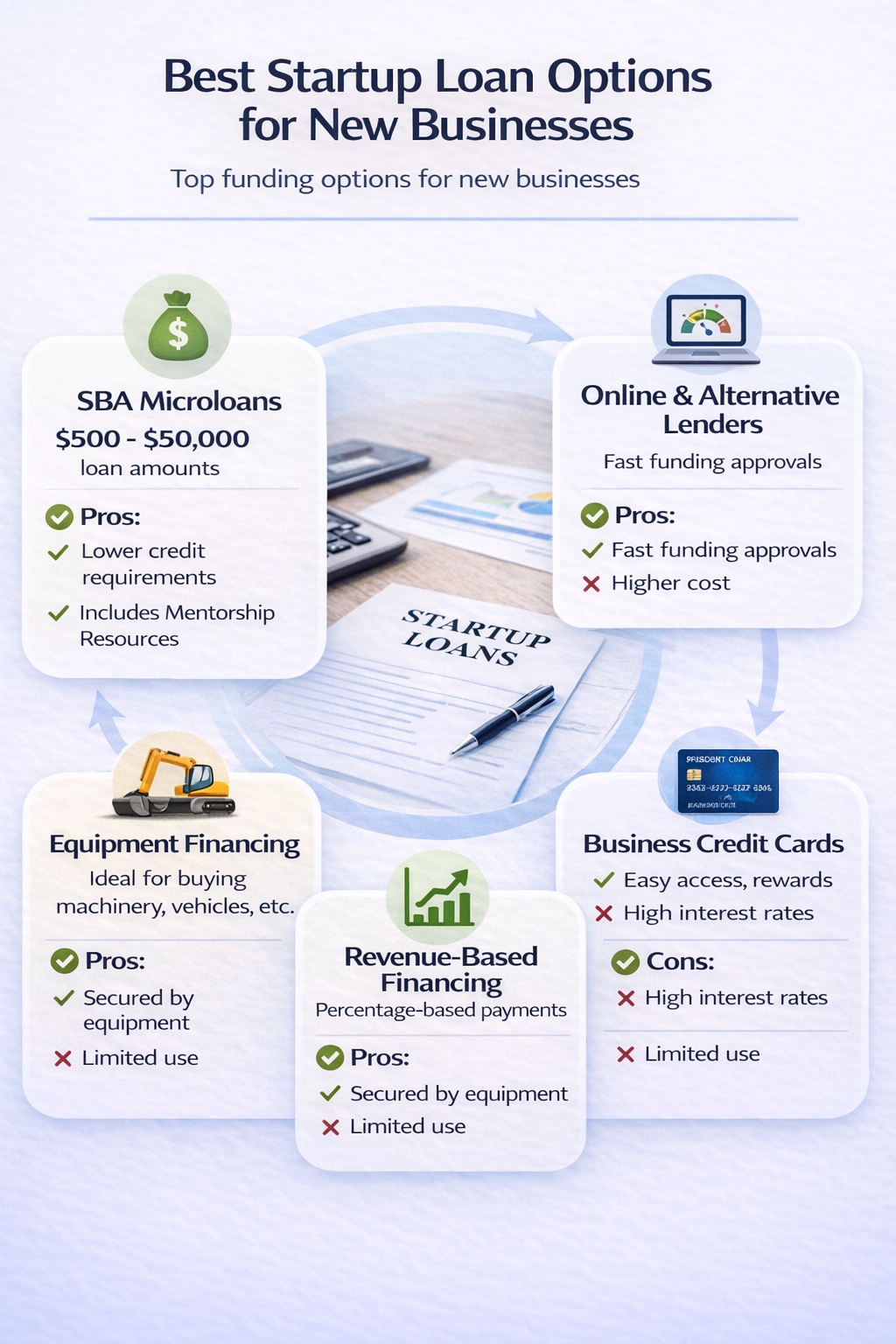
The U.S. Small Business Administration (SBA) offers several avenues for startup funding, with SBA Microloans standing out as one of the most accessible and supportive options. These loans are disbursed through nonprofit intermediary lenders, with the SBA providing partial guarantees to reduce risk for the lenders. Loan amounts typically range from $500 up to $50,000, making them ideal for smaller capital needs critical for initial operations and covering essential startup expenses.

A significant advantage of the SBA Microloan program is the inclusion of additional support services. These often extend beyond mere funding to encompass valuable business counseling, mentorship, and financial education. For new entrepreneurs, this guidance can be as crucial as the capital itself, helping them navigate challenges and foster small business growth. You might explore SBA microloans because they offer support.

To qualify for an SBA Microloan, eligibility requirements generally include having a solid business plan, demonstrating a need for the funds, and having a reasonable credit history. While the credit score requirements may be more flexible than traditional bank loans, lenders will still review your credit report to assess your repayment capacity. The application process involves working directly with an SBA intermediary lender, who will guide you through submitting necessary documentation, including financial statements and potentially bank statements. These loan programs are designed to empower individuals who may otherwise struggle to secure funding, including those with potentially bad credit or limited prior access to capital. The Small Business Administration plays a pivotal role in fostering small business growth across the United States by facilitating access to this vital funding.

Online and Alternative Startup Lenders

Best for: Founders seeking fast funding, flexible qualifications, and those who may have imperfect credit.

The landscape of business financing has been significantly reshaped by online and alternative lenders. These entities leverage technology-driven underwriting models that consider a broader spectrum of data points beyond a traditional credit score. Approval decisions may factor in personal income, industry experience, projected annual revenue, and the overall viability of the business concept, making them a compelling option for startups with limited operating history. You might consider online lenders for faster service.

Pros:

  • Rapid approvals and funding: Many online lenders offer streamlined digital application processes, with decisions and funding sometimes occurring within days. This is a critical advantage for businesses needing capital quickly to seize opportunities or cover immediate startup expenses.
  • Flexible eligibility standards: The qualification criteria for online lenders are often more accommodating than those of traditional banks. They may be more willing to work with businesses that have a lower credit score, less established credit history, or a shorter time in business, making them a viable option for founders with bad credit.
  • Diverse loan products: Online platforms offer a variety of funding options, including term loans, lines of credit, and even revenue-based financing, allowing businesses to choose a product that best suits their needs.

Cons:

  • Higher interest rates: To compensate for the increased risk and speed, online lenders often charge higher interest rates and fees compared to SBA-backed or traditional bank loans. Understanding the true cost, including the Interest Rate and any associated charges, is crucial.
  • Shorter repayment terms: Some online loans come with shorter repayment periods, which can result in higher monthly payments. This necessitates careful consideration of your projected cash flow.

These lenders can be a valuable resource for small business owners seeking to bridge funding gaps or when traditional business loans are not immediately accessible. While they offer speed and flexibility, it’s imperative to compare offers and thoroughly understand the loan terms and overall cost before committing.

Business Credit Cards for Startups

Best for: Early operational expenses, short-term funding needs, and building business credit.

Business credit cards are frequently an overlooked yet highly effective startup loan tool when used strategically. Many founders utilize them for essential early-stage expenses such as marketing campaigns, software subscriptions, office supplies, initial inventory purchases, or even initial startup expenses. They offer a convenient way to manage day-to-day operational costs and can be a foundational element in establishing business credit from the outset. Many founders use these loans for early expenses.

Pros:

  • Quick and easy access to capital: Provides immediate funds for small, recurring expenses without a lengthy application process. This is particularly helpful for managing unexpected costs or taking advantage of early-bird discounts.
  • Helps establish business credit history: Responsible use and timely payments on business credit cards can contribute significantly to building a positive business credit profile, which is essential for securing larger business loans in the future. This is a critical step for any small business owner looking to improve their creditworthiness.
  • Rewards and perks: Many business credit cards offer rewards programs, such as cashback, travel miles, or statement credits, which can provide additional value and offset some business costs.
  • Separates personal and business finances: Using a dedicated business credit card helps maintain clear separation between personal and business expenditures, simplifying accounting and tax preparation.

Cons:

  • High interest rates: Similar to other forms of unsecured lending, business credit cards often carry high interest rates. If balances are not paid in full each month, the cost of borrowing can escalate rapidly.
  • Limited loan amounts: The credit limits on business credit cards are typically lower than traditional business loans or lines of credit, making them less suitable for substantial capital investments.
  • Impact on personal credit: Many business credit cards require a personal guarantee from the business owner, meaning that missed payments can negatively affect your personal credit score.

When used responsibly, business credit cards can be a powerful tool for managing immediate needs and laying the groundwork for future business financing. It’s crucial to select a card that aligns with your spending habits and to prioritize paying off balances to avoid accumulating high-interest debt.

Revenue-Based Financing for Early Traction Startups

Best for: Businesses generating consistent revenue with potentially fluctuating income.

Revenue-based financing (RBF) offers a unique approach to business financing by providing capital in exchange for a percentage of future revenue. Unlike traditional business loans with fixed monthly payments, RBF repayments automatically adjust based on the business’s performance. When annual revenue is strong, payments are higher; during slower months, payments decrease, offering a flexible repayment structure that aligns with fluctuating income. This can be a particularly attractive option for startups that have achieved initial traction and are demonstrating consistent monthly revenue but may experience seasonal dips.

Pros:

  • No fixed monthly payment: This is a major advantage for startups with irregular income streams, as it alleviates the pressure of meeting rigid payment deadlines. Repayments naturally scale with your income, supporting a healthier cash flow.
  • Less emphasis on credit score: Lenders primarily focus on your current revenue generation and the potential for future income, making it a viable option for businesses with a less-than-perfect credit score or limited credit history.
  • Alignment with business growth: The repayment structure directly ties into your success. As your annual revenue grows, so does your repayment capacity, creating a symbiotic relationship between the lender and your business expansion goals.
  • Faster funding: Compared to traditional bank loans, RBF applications and funding can often be processed more quickly, which is beneficial for businesses that need capital promptly.

Cons:

  • Potentially higher overall cost: While flexible, the percentage of revenue taken can sometimes result in a higher total repayment amount over the life of the financing compared to a traditional loan with a lower interest rate.
  • Impact on future revenue: A portion of your future earnings is committed to repayment, which can affect the capital available for reinvestment in the business.

Revenue-based financing is an excellent tool for small business owners who have established a demonstrable revenue stream and are looking for flexible capital to fuel business expansion or manage operational fluctuations. It’s essential to understand the percentage of revenue that will be remitted and how this impacts your long-term profit margins.

Equipment Financing

Best for: Businesses that need machinery, vehicles, or specialized equipment to operate or expand.

Equipment financing is a specialized form of business loan that allows startups to acquire necessary assets, such as machinery, vehicles, or technology, while using the equipment itself as collateral. This structure significantly reduces the risk for lenders, often improving approval chances for new businesses that may lack other forms of collateral. The financed equipment serves as security for the loan. This financing option is very useful for businesses in construction, transportation, manufacturing, and service industries. These businesses need specific tools and machines to operate and grow. You might evaluate equipment financing to buy important assets.

Pros:

  • Easier qualification: The collateralized nature of the loan makes it more accessible for startups with limited credit history, bad credit, or a lack of alternative business assets.
  • Preserves working capital: By financing equipment, you avoid tying up your available cash flow or using funds earmarked for a working capital loan. This keeps liquid capital available for other critical business needs.
  • Potential for 100% financing: In some cases, lenders may finance up to 100% of the equipment’s cost, reducing the need for a significant down payment.
  • Ownership of assets: Once the loan is repaid, you own the equipment outright, adding valuable assets to your business.

Cons:

  • Limited to equipment purchase: The funds from an equipment loan can only be used for the acquisition of specific machinery or equipment.
  • Depreciation risk: Equipment depreciates over time, meaning its resale value might be less than the outstanding loan balance.
  • Potential for liens: Lenders may place a lien on the equipment, and sometimes a blanket lien on all business assets, as security for the loan.

Equipment financing is crucial for businesses where specialized machinery is fundamental to operations or business expansion. It allows entrepreneurs to acquire the tools of their trade without depleting essential operating funds, directly supporting their ability to deliver services or products.

What Lenders Look for in New Businesses

Although new businesses often lack a long operating history, startup lenders are keen to evaluate a venture’s potential for success. They focus on a combination of factors to gauge the entrepreneur’s readiness and the business’s financial discipline. A critical element is a clear, well-researched, and realistic business plan that demonstrates a thorough understanding of the market, operational strategies, and financial forecasts. Lenders consider how detailed and realistic your business plan is. The founder’s relevant industry experience is also heavily weighted, as it indicates an ability to execute the business plan effectively.

Lenders will scrutinize your personal financial profile, including your personal credit score and credit history, as these are often strong indicators of how you will manage business debt. Stable personal income can also provide a level of assurance. Beyond personal credit, lenders will assess your emerging business credit profile if one exists, looking at your credit report and payment history. Projected annual revenue and monthly revenue are crucial for demonstrating repayment ability, supported by realistic financial projections. Understanding your cash flow is paramount.

Furthermore, lenders evaluate the overall business purpose of the loan. Whether it’s for acquiring real estate, purchasing equipment, or securing working capital, the clarity and justification for the funds are key. Having necessary business licenses and proper legal registration in place also signals professionalism and readiness. While a minimum of 2 years in business is often preferred for traditional loans, startup loans look for indicators of future success. The SBA-guaranteed loan program, for instance, is designed to support businesses that might not meet conventional lending criteria. Lenders will also require financial statements, including bank statements, to verify financial health and activity.

How Startup Loans USA Helps New Businesses

Navigating the diverse landscape of startup loan options can feel overwhelming for aspiring entrepreneurs. At Startup Loans USA, our mission is to simplify this complex process by providing clarity and actionable guidance. We help founders understand which loan programs genuinely align with their specific business goals and financial profiles, ensuring they explore realistic funding options. Our approach is educational and founder-centric. We assist you in identifying startup loans and business loans that you have a strong chance of qualifying for, based on your financial standing and business plan. This proactive approach helps you avoid wasting time on lenders or loan programs that are unlikely to approve your application, thereby protecting your credit score from unnecessary hard inquiries. We aim to connect you with the best small business loans online.

We understand that securing business financing is a critical step for small business growth. Our expertise covers a wide range of options, from SBA microloans and the comprehensive 7(a) loans program to alternative lenders and flexible lines of credit. We guide you through understanding the nuances of interest rates, loan terms, and the importance of a sound business plan and accurate financial statements. For businesses seeking to acquire assets, we can help you explore equipment financing or loans for real estate. We also help entrepreneurs understand how to leverage their existing business assets and prepare for the application process. By providing tailored advice and connecting you with suitable external funding partners, Startup Loans USA aims to empower your entrepreneurial journey. Our goal is to make securing startup capital as straightforward and successful as possible for every small business owner across the United States.

Final Thoughts

New businesses can access meaningful startup capital, but selecting the wrong loan can lead to unnecessary financial strain and hinder progress. The best startup loan is not a one-size-fits-all solution; it is the one that precisely aligns with your specific business model, operational timeline, risk tolerance, and overarching long-term business goals. The best startup loan is not the same for everyone. It should match your business model, timeline, risk tolerance, and long-term goals. A thorough understanding of interest rates (including APR), loan terms, repayment structures, and any required personal guarantee is absolutely essential before committing to any financial agreement. You must fully understand interest rates, including APR. You should know the loan terms and repayment plans. You must also be aware of any required personal guarantees. Understand these before agreeing to any loan.

Whether you are exploring SBA microloans for their supportive structure, considering online lenders for speed, seeking a working capital loan to manage daily operations, or evaluating equipment financing for essential assets, making informed decisions is paramount. In 2023, small banks had the highest full business loan approval rate at 52%, highlighting the importance of exploring various lender types. Approximately 20% of startups survive their first two years, with success rates varying significantly across industries and regions, underscoring the need for adequate and well-chosen funding.

Remember that securing startup loans is not just about acquiring funds; it’s about establishing a strong financial foundation for future small business growth and potential business expansion. Carefully consider your options, prepare a compelling business plan, and understand all eligibility requirements. With the right business financing, your new venture can achieve its ambitious goals. If you need to refinance debt or are seeking specialized loan programs, proactive research and professional guidance are key. For any questions regarding your contact information or to explore options further, always reach out to potential lenders or financial advisors.

Share this post

Related Posts

Startup Loans

Best Startup Loan Options for New Businesses

Startup loans help service-based businesses succeed without a storefront. This guide breaks down funding options for service entrepreneurs, how to qualify without a physical location, and how to use financing to scale operations, invest in tools, and build long-term stability.

Read More »